A growing food brand sells through major national distributors. Every couple of weeks, they get a single payment: one ACH deposit that bundles together payments for a dozen invoices, minus chargebacks for spoilage, promo allowances, freight, and pricing adjustments.
Their AR person opens the PDF, opens the Google Sheet, and starts matching. Line by line. Invoice by invoice. It takes about an hour per remittance. Multiply that by every distributor, every pay cycle, all year, and you're looking at someone spending a significant chunk of their week on what is essentially data entry.
This is a person who understands the business, knows the distributor relationships, and has good judgment on which deductions to fight. But most of her time is spent copying numbers between a PDF and a spreadsheet.
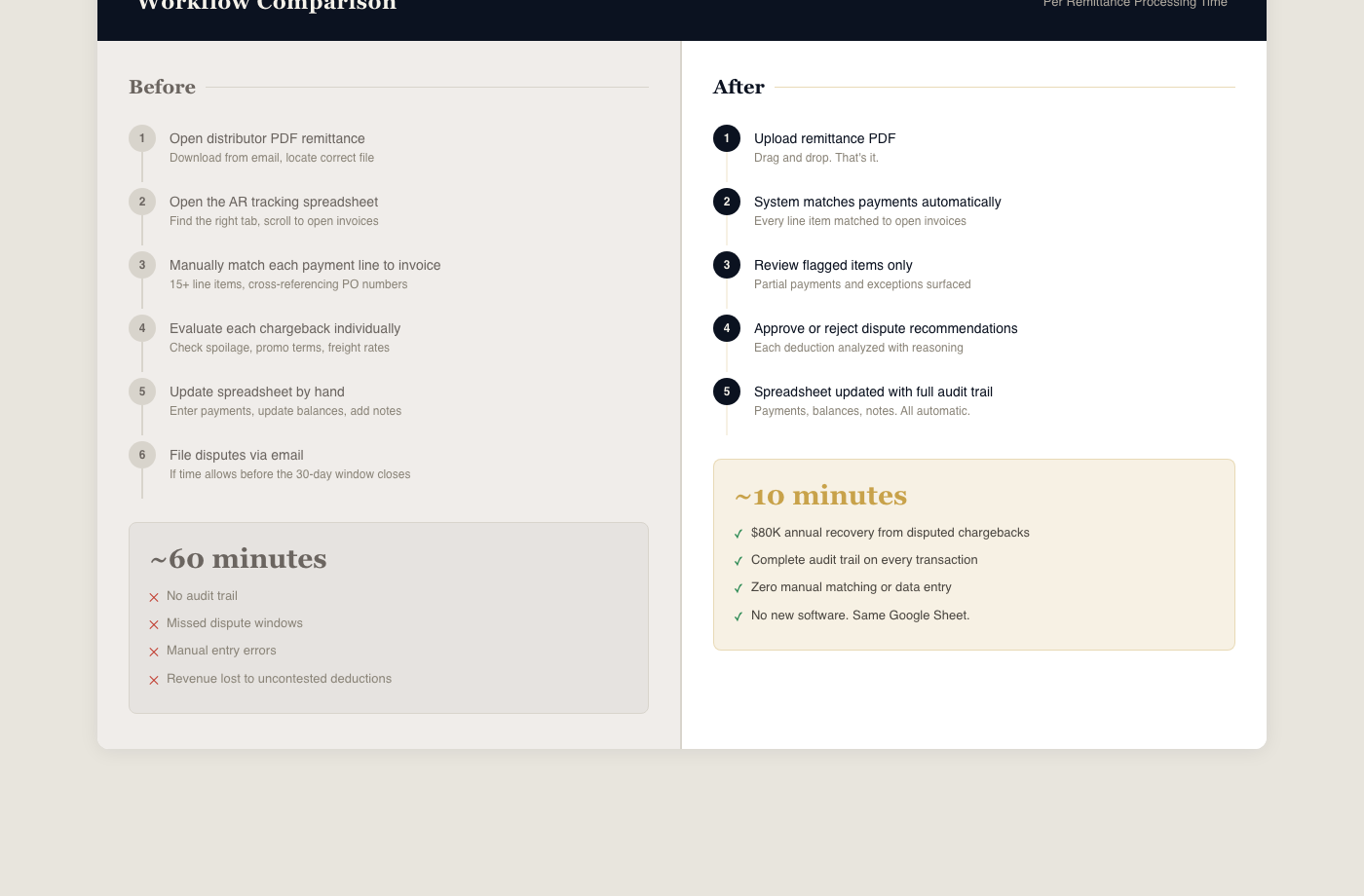
Reconciliation went from a 60-minute manual process to 10 minutes of reviewing flagged exceptions.
What we built
We built a system that does the matching for her.
Matching. The system reads distributor remittance PDFs and matches every payment line to the corresponding open invoice automatically. Full payments, partial payments, and unmatched items are classified and flagged.
Spreadsheet integration. The company's Google Sheet is their system of record and we kept it that way. The system writes results directly back, updating payments, recalculating balances, and appending notes that create a complete audit trail. No new software to learn. No migration.
Reporting. A reconciliation report breaks out every payment, every chargeback with a recommended action, and every unpaid invoice with aging.
Reconciliation time went from about an hour per remittance to about ten minutes, and that ten minutes is spent reviewing flagged items that actually need her judgment, not copying invoice numbers.
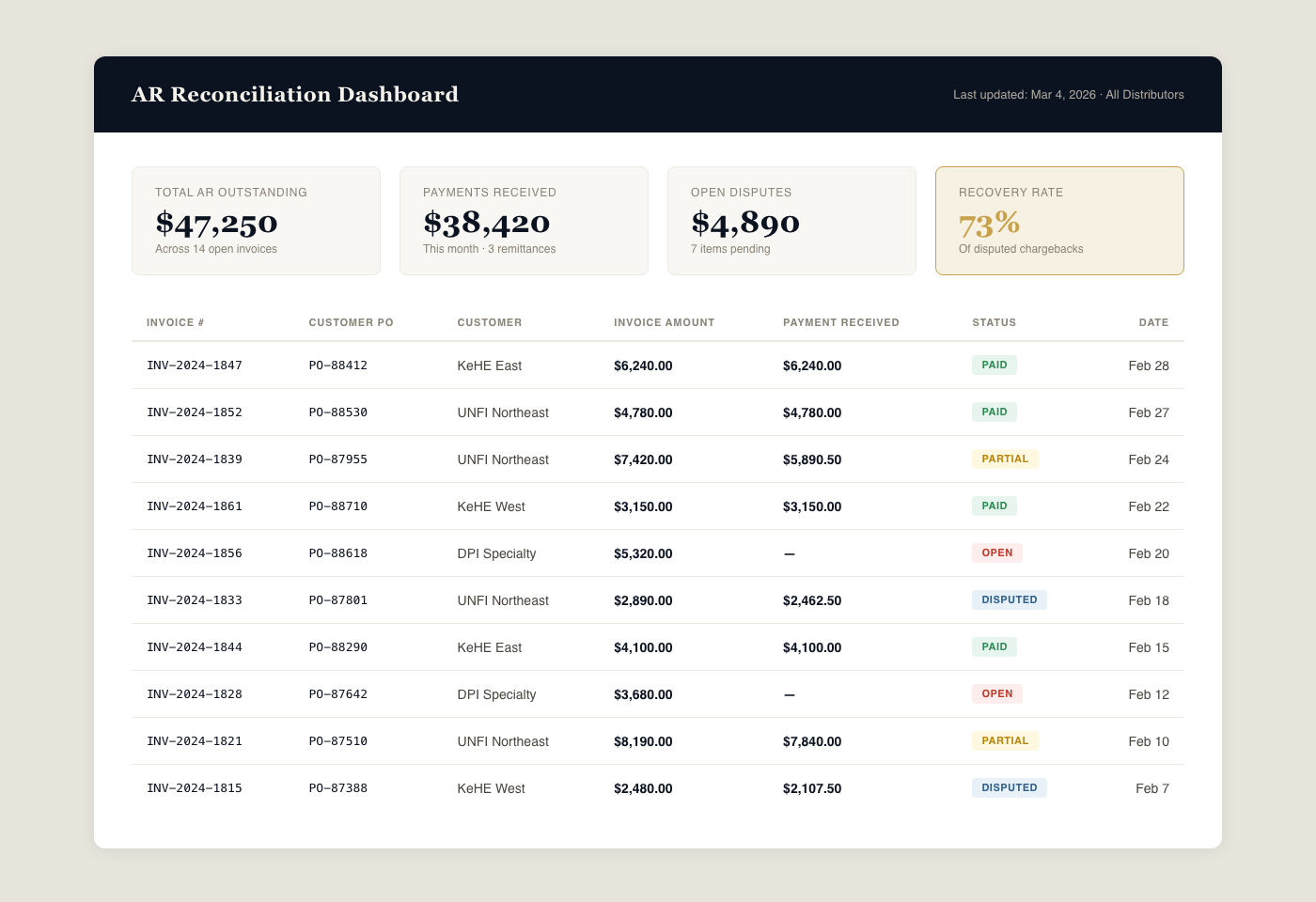
The reconciliation dashboard: open invoices, payments received, and dispute status at a glance.
What else we found
Once the mechanical work was automated, something else became visible. The system evaluates every distributor deduction against a set of rules: spoilage thresholds, BOL verification, trade spend agreements, and flags the ones worth disputing.
When reconciliation is manual, those deductions get accepted by default. Not because anyone decided they were valid, but because nobody had time to check before the 30-day dispute window closed.
Across all distributors over the course of a year, this company recovers approximately $80,000 in disputed chargebacks. That is $80,000 that goes straight to the bottom line: revenue that was already earned but would have been lost to uncontested deductions.
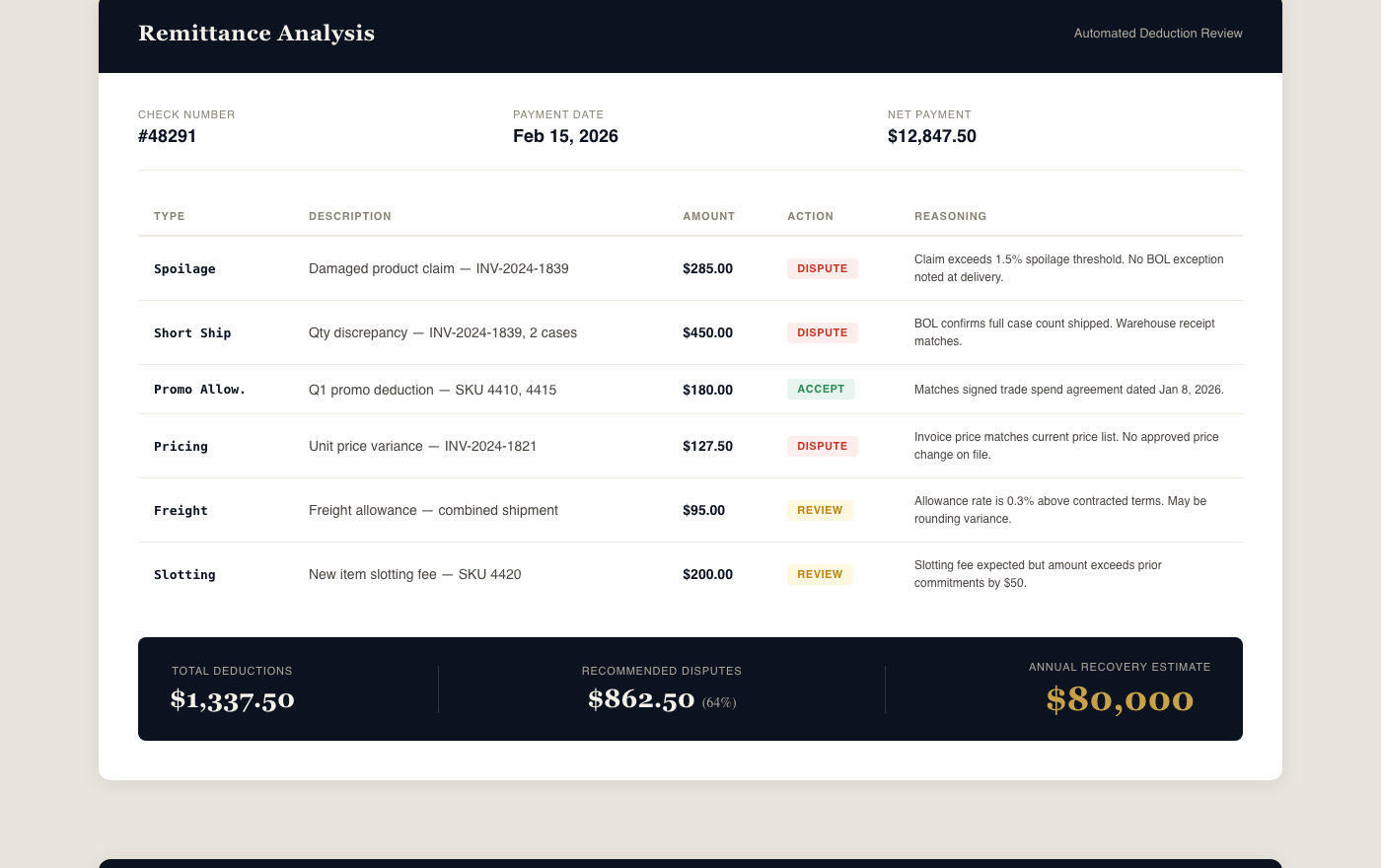
Every deduction is evaluated against distributor agreements, with a recommended action and reasoning.
Systematic tracking also revealed patterns in distributor behavior that were invisible when everything lived in a spreadsheet with no audit trail.
How it works now
She uploads the remittance. The system does the matching, flags the exceptions, and updates the spreadsheet. She reviews the flags, makes the calls on what to dispute, and moves on. The rest of her week is back.
No new software. No migration. The Google Sheet is still the system of record. We just took the manual work out of it.